The Silent Gliss Wave Curtain System: How It Works and Why It Looks So Good

Reviewed by David Coleman, Website Manager
Reviewed 30 March 2026
What is the Wave curtain system?
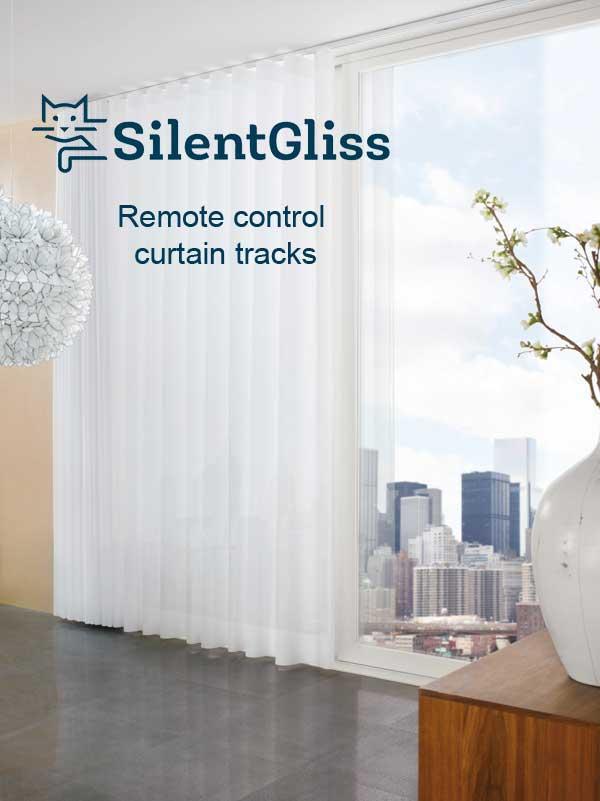
Wave is a curtain heading system developed by Silent Gliss. Instead of traditional pencil pleats or pinch pleats, the fabric forms smooth, continuous S-shaped waves from one end of the track to the other. The result is a clean, uniform fold that looks exactly the same whether the curtains are fully open, fully closed, or somewhere in between.
It is a popular choice for new builds and contemporary interiors because it reads as calm and uncluttered. There are no pinched tops, no irregular bunching, and no exposed hooks or tape. Just fabric, flowing in consistent curves.
How the gliders work
The wave shape is not created by the fabric itself. It is driven by the gliders. Wave gliders are spaced at fixed intervals along the track, either 60mm or 80mm apart depending on the weight and drape of your fabric. Each glider is shaped to pull the curtain slightly forward or backward as it travels along the track, which is what creates the alternating S-curve pattern.
The gliders clip directly into the track. The curtain then hooks into the gliders via tape sewn along the top of the fabric. There is no complicated rigging involved. If you have hung a standard curtain before, the Wave system is not a significant step up in complexity.
Because the glider spacing is fixed and consistent, the waves are the same size across the entire width of the curtain. This regularity is what gives Wave its distinctive, architectural look.
Which tracks is it compatible with?
Wave works with the Silent Gliss Autoglide 5100 motor track, which is the most popular electric track we fit. It also works with Silent Gliss manual tracks if you are not going automated.
If you are considering electric curtains with a Wave heading, the Autoglide 5100 is the natural pairing. The motor draws the curtains smoothly and quietly, and the Wave gliders travel cleanly along the track without snagging or bunching, provided the fabric is suitable.
Fabric requirements
Not every fabric works well with Wave. The system performs best with lightweight to medium weight fabrics that have a natural drape to them. Stiff or heavy fabrics will not form the curves properly and the waves will look forced rather than fluid.
We supply Wave-compatible fabric alongside the tracks, which takes the guesswork out of it. If you are bringing your own fabric, the main things to check are weight and whether it has enough drape to fall naturally into the S-shape. A fabric that works well as a standard headed curtain may not behave well with Wave. It is worth testing a sample before committing.
One thing to factor into your budget: Wave curtains use more fabric than a standard heading. You will typically need around twice the track length in fabric width to achieve the correct fullness. This is what gives the waves their depth. Cut corners on fabric quantity and the waves will look flat rather than full and considered.
Measuring and fitting
Because the glider spacing determines the wave pattern, the number of gliders needs to be calculated correctly for your track length. Too few and the waves are too wide and loose. Too many and they will be cramped.
The curtain tape also needs to be sewn at the right header height. Wave tape is different from standard curtain tape. It has evenly spaced pockets at the correct intervals to match your chosen glider spacing. If you are having curtains made up, make sure the maker knows you are using Wave and which glider spacing (60mm or 80mm) you have gone with.
Drop is measured and hung the same way as any other track system. The curtains should just clear the floor if you want a clean look, or pool slightly if you are after something softer. Wave works well either way.
Is Wave right for your project?
Wave suits contemporary rooms well. Open plan spaces, large windows, rooms with clean architectural lines. It also works in more traditional settings if the fabric is right. A soft linen in a Wave heading can look relaxed rather than clinical.
Where it is less suited is in rooms where you want a very full, gathered look. If you want a lot of drama and volume at the heading, traditional pinch pleats or pencil pleats will give you more of that. Wave is about restraint and consistency.
For more detail on choosing Wave fabrics and planning your curtain project, see our full guide to Silent Gliss Wave curtains.
If you have a project in mind and want to talk through whether Wave is the right heading for it, get in touch. We are happy to advise before you buy.
Shop our range
Browse the products mentioned in this article