Electric Curtains vs Roller Blinds: Which One Fits Your Room

Reviewed by David Coleman, Website Manager
Reviewed 29 April 2026
Someone stands in a new kitchen extension with a wide window over the sink and asks what they should put up there. The answer is a motorised roller blind, not a curtain. A curtain over a sink picks up damp every time you run the tap, holds the smell of whatever's on the hob, and you can't wipe it clean, it has to come down and go in the wash. A roller wipes down with a damp cloth and rolls out of the way when you're not using it. The same person, years earlier, in the same house's original Victorian bay window, asked the same question, and the answer was curtains, because a roller blind can't follow the angles of a bay. Both questions had easy answers, and both had different answers, which is why this article exists.
Most UK homes end up with a mix of electric curtains and motorised roller blinds, not one or the other. The usual reason people think they have to pick is that they've only been to a shop that stocks one kind, so this page gives both sides evenly. We sell Silent Gliss tracks and Silent Gliss rollers, and we'd rather you bought whichever is right for the room than buy the wrong one because you didn't know the other existed.
What each one is actually good at
Electric curtains sit on a track or pole, and the curtains gather to one or both sides when they open. That makes curtains the right fit for wide windows, tall windows, bay windows, and any room where you want the window to feel dressed, softened, or layered. They also cover the electric motor when drawn, so the mechanism stays out of sight.
Roller blinds roll up into a slim tube at the top of the window and drop down in a flat panel when you close them. That makes rollers the right fit for small windows, bathrooms, kitchens, and anywhere you want a clean, flat, minimal finish. They don't dress the room the way curtains do, but they also don't eat wall space when they're open.
Neither is better as a generalisation, they just do different jobs. The rest of this article is the room-by-room version.
Room by room
Living rooms, dining rooms, main bedrooms. Curtains win most of the time. These are the rooms where softness, layering and a finished aesthetic matter, and curtains are what people picture when they imagine the room properly dressed. The Silent Gliss Autoglide 5100 is the standard answer for domestic rooms, plugs in, no electrician, handles runs up to 9 metres across.
Small bedrooms, spare rooms, guest rooms. Rollers often win. These rooms usually have standard rectangular windows, not enormous ones, and you're not trying to make a design feature of the window. A Silent Gliss 4955 battery-operated roller blind can be fitted in an afternoon with no wiring, lasts years on a set of AA batteries, and stays out of the way when rolled up.
Bathrooms and kitchens. Rollers. Curtains and steamy damp environments don't get on, and rollers in a moisture-tolerant fabric are the practical answer. The 4955 battery roller suits bathrooms where power is often awkward to run.
Home offices, studies. Rollers, usually. You want clean minimal lines, you want the blind to stay out of the frame when up, and you often want a single blackout pull for video calls. Silent Gliss Vision blinds are the choice if you want day-and-night shading on one roller.
Skylights and roof windows. Neither a standard roller nor a curtain works on these. The fabric needs to be tensioned against the glass with side rails so it doesn't sag away from the glass. We don't currently offer solutions for angled windows on the website, however we can quote you for them through Haywoods, the family business that runs Discount Electric Curtains. Just contact us on 01543 279996.
Bay windows. Curtains. The 5100 is bendable and follows the angle of a bay in one continuous motion, which rollers cannot do. Each sash of a bay would need its own separate roller, which looks clunky and reads as three small windows rather than one big one. Curtains draw across the bay as one.
Long hotel-style runs, commercial halls, or very heavy interlined curtains. The 5600 handles up to 25 metres and 65kg, and needs an electrician to wire it in. That's the right choice when the room is big enough that rollers don't really apply.
Home cinema, blackout, late sleepers. Either works. Curtains with blackout lining give you more deadening because the fabric absorbs sound as well as light, and they're softer on the room acoustically. A 4955 or 4960 mains roller in a blackout fabric gets you the darkness without the fabric mass, so it's a question of whether you want the room to feel plush or minimal. Worth knowing that neither a curtain nor a roller on its own gives true blackout, light still creeps in around the edges. For a properly dark room, the answer is usually both, a roller fitted tight inside the recess and blackout curtains hung outside it. Get in touch if that's what you're after and we'll talk you through the options.
Install type, cable, and budget
Curtains and blinds both have a plug-in option and a hardwired option, so the question isn't "which is easier to install" but "which one fits what I've got."
- Plug-in, no electrician: 5100 electric curtain track, electric Metropole pole. Sockets near the window.
- Battery, no wiring at all: 4955 roller. Good for awkward windows or rentals.
- Hardwired, electrician: 5600 electric curtain track and 4960 mains roller. Needed for heavy or long-run curtains, and for any roller you want hardwired into a smart-home setup.
Total cost tends to be lower per window for rollers than curtains of the same window size, because you don't need to buy the curtain fabric as well. If you already have curtains you love and the track is the only thing that needs upgrading, curtains get cheaper than rollers because the fabric is already paid for.
Aesthetic
If you want the window to disappear into the wall treatment, curtains. If you want the window to read as an architectural feature with a clean hard edge, rollers. Most interior designers pick on this first, before any of the practical questions above, because it's the decision that determines how the room reads when the curtains are drawn or the blinds are down.
A decision shortcut
If you're still torn, the honest summary is roughly this. Big window in a living room or bedroom that you want properly dressed, go curtains. Standard window in a bedroom, bathroom, kitchen or office with no ceremony required, go rollers. Bay, go curtains. Skylight or angled window, contact us and we'll quote it through Haywoods. If you want to send us a photo of the room and tell us what you're trying to achieve, call us on 01543 279996 or drop us a message, and we'll tell you which way round it should go.
Browse the full electric curtains range or the roller blinds range to price up whichever you land on.
Common questions
Can I have both electric curtains and roller blinds on the same window?
Yes, and plenty of our customers do. You'd typically fit a roller blind inside the recess for light control and a curtain on a track outside the recess for dressing. Both can be motorised and operated from the same remote if you order matching Silent Gliss kit.
Which is cheaper, electric curtains or roller blinds?
Per window, rollers are usually cheaper because you're not buying curtain fabric as well. Curtains get more cost-effective on wider windows because a longer track costs less per metre than multiple rollers covering the same span, and less again if you already own curtains you'd like to keep.
Do roller blinds go around a bay window?
No, not as one continuous blind. You'd fit one roller per sash of the bay, which gives you three or four separate blinds to operate individually. Curtains on a bent 5100 track are the usual answer for bays because they draw across the whole bay in one movement.
Which is better for blackout?
Either works for most uses, but neither on its own gives true blackout, light still creeps in around the edges of any single covering. A blackout roller like the 4955 or 4960 blocks light at the blind itself. A curtain with blackout lining blocks light and deadens sound a little from the fabric mass. For a bedroom, curtains with blackout lining feel warmer and softer. For a true cinema-dark room, the answer is usually both: a roller fitted tight inside the recess plus blackout curtains hung outside it. We're happy to spec that combination, just get in touch.
Can I get battery-operated electric curtains?
No, all the electric curtain tracks we sell are mains-powered (either plug-in or wired). If battery operation is essential, a battery roller blind is the only Silent Gliss option.
Shop our range
Browse the products mentioned in this article
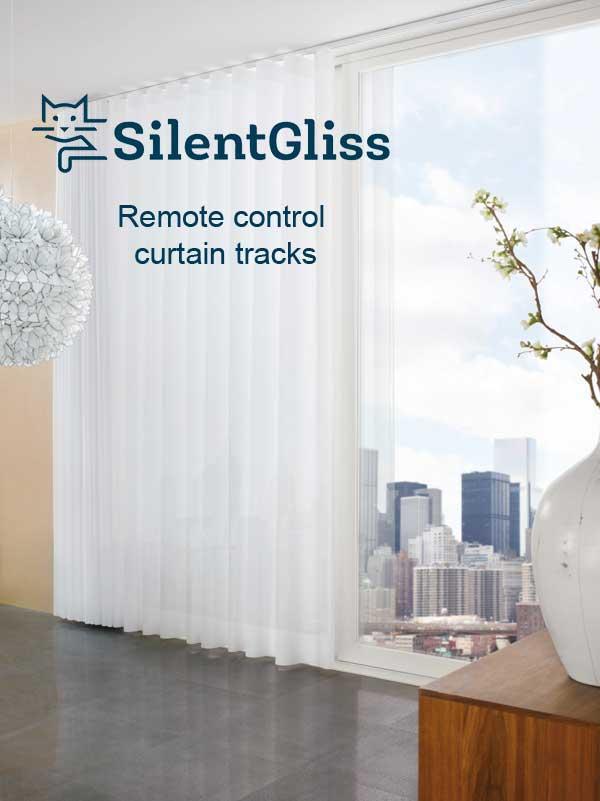
Silent Gliss Autoglide 5100
The UK's best-selling premium electric curtain track. Whisper-quiet, remote or timer control.
View product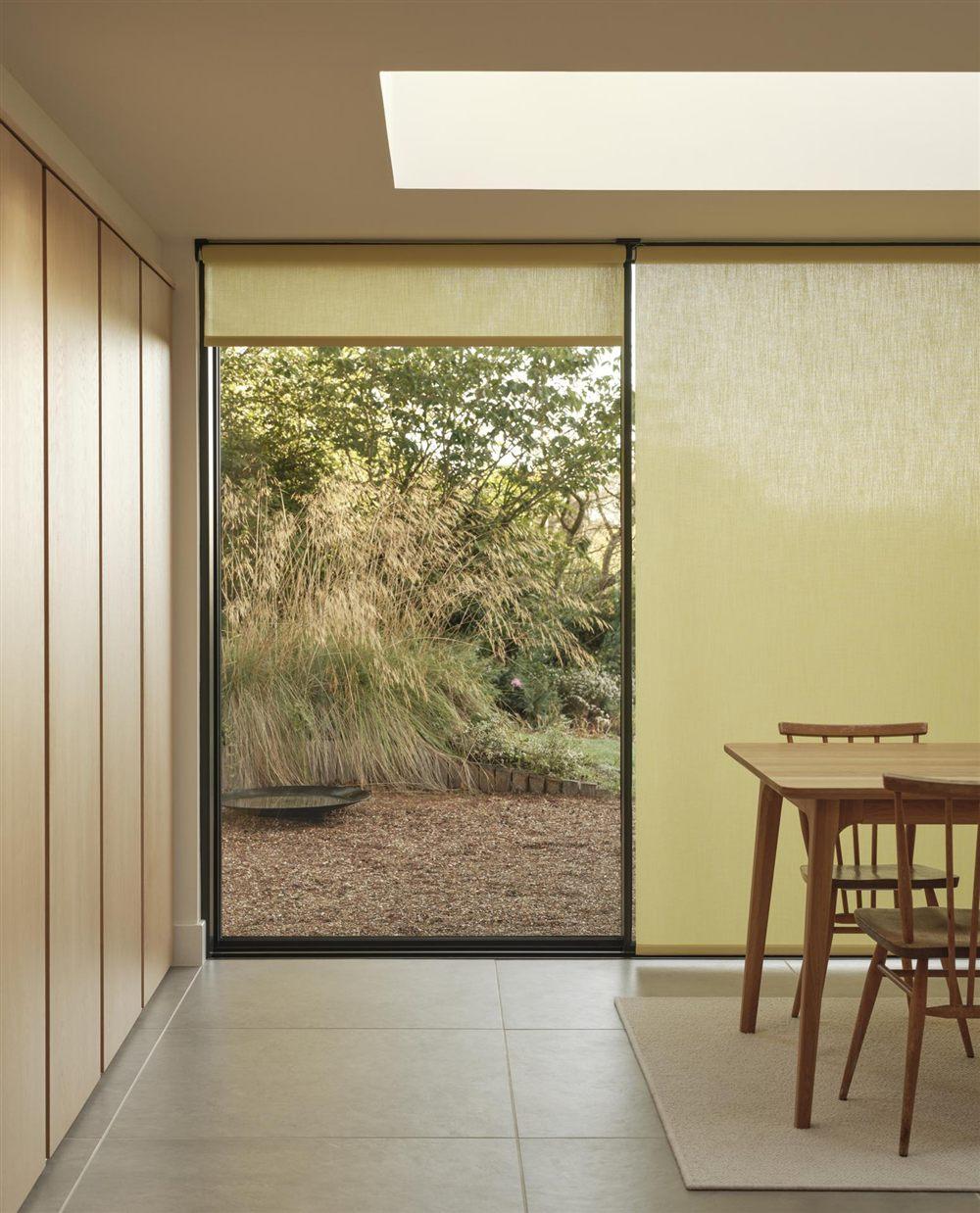
Silent Gliss 4955 Roller Blind
Battery-powered electric roller blind. No wiring needed, 3-year battery life.
View product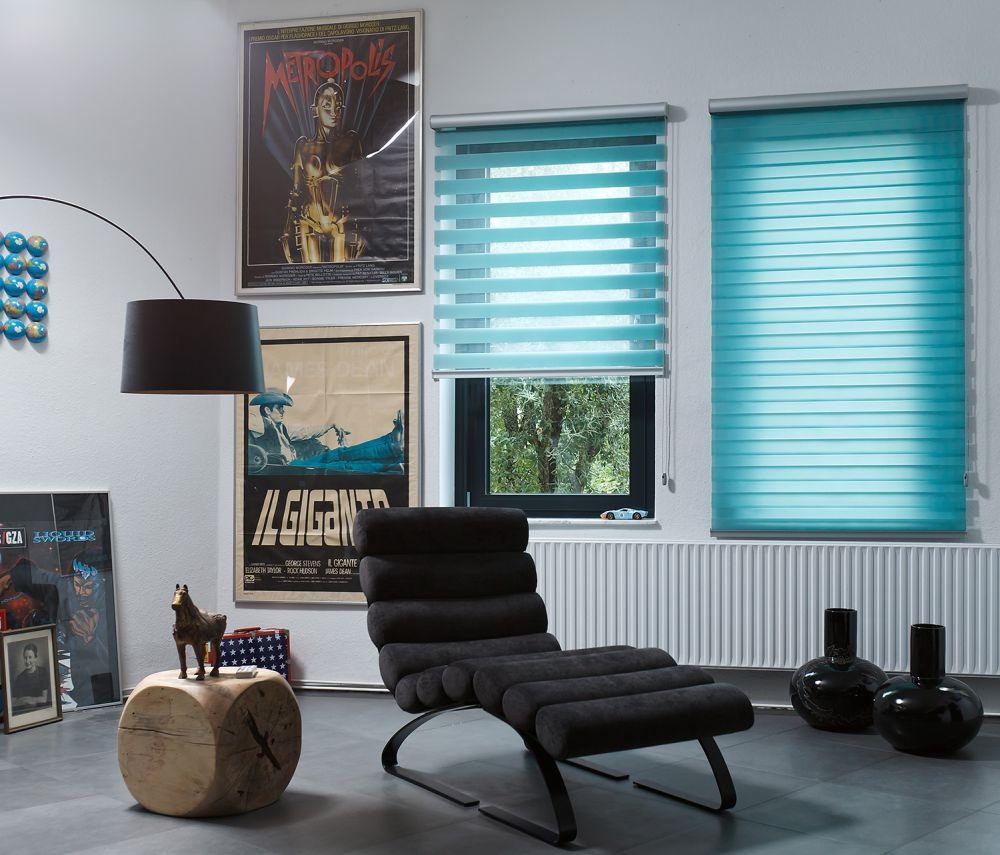
Vision Day & Night Blind
Alternating sheer and opaque strips for flexible light control.
View product