Plaster-In Curtain Tracks: The Complete Guide to Recessed Installation

Reviewed by David Coleman, Website Manager
Reviewed 7 May 2026
What is a plaster-in curtain track?
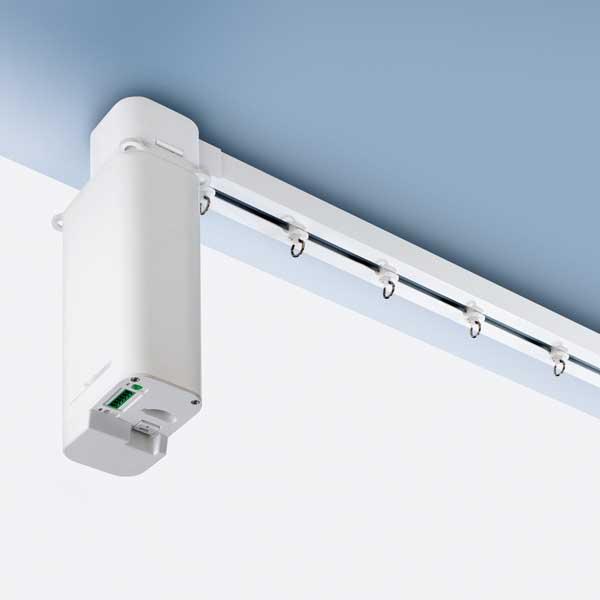
A plaster-in curtain track sits inside a recess in your ceiling, hidden from view. When the curtains are open, you see a clean ceiling line with no visible hardware. The track, motor (if electric), and curtain heading all tuck away into the recess. It is the most smooth way to hang curtains and a popular choice for new builds, extensions, and high-end renovations.
You might hear them called recessed curtain tracks, concealed curtain tracks, flush-mount tracks, or hidden tracks. They all mean the same thing: the track is installed inside the ceiling rather than mounted on the surface.
Why choose a recessed curtain track?
The main reason is aesthetics. A plaster-in track gives you floor-to-ceiling curtains with no visible bracket, rail, or pelmet. The curtains appear to float from the ceiling. This creates a clean, modern look that works particularly well with:
- Large windows and full-height glazing
- Open-plan living spaces where you want minimal visual clutter
- Contemporary interiors and minimalist design schemes
- Rooms with low ceilings, where a visible track would make the ceiling feel lower
Beyond looks, a recessed track also protects the mechanism from dust and accidental damage, and it eliminates the gap between the curtain heading and the ceiling that you get with surface-mounted tracks.
Planning ahead: new build vs retrofit
The single most important factor is timing. Installing a plaster-in curtain track is straightforward if you plan it before the ceiling is finished. Retrofitting one into an existing ceiling is significantly more work.
New build or renovation (recommended)
If you are building an extension, converting a loft, or renovating a room down to the plasterboard, this is the ideal time to install a recessed track. Your builder or plasterer creates the recess in the ceiling at first-fix stage, before the final skim coat goes on. The track drops into the recess, the plasterer finishes around it, and the result is a perfectly flush ceiling line.
At this stage you need to know:
- The exact track length (measure the window opening plus any overlap you want)
- Whether you want a manual or motorised track (electric tracks need a power supply routed to the recess)
- The recess dimensions: width, depth, and length. These depend on the track model and whether your curtains use a wave heading (which needs more depth for the stack).
Retrofitting into an existing ceiling
This is possible but involves cutting into the ceiling, which means making good afterwards. You will need to:
- Locate the ceiling joists (you need solid timber to fix the track to, not just plasterboard)
- Cut a channel in the plasterboard between the joists, or install a timber batten if the joists run the wrong way
- Install the track and re-plaster around it
For retrofit work, we would always recommend getting a builder involved. The structural considerations around cutting into a ceiling are not something to take lightly, particularly in older properties where the ceiling construction may not be straightforward.
Which tracks can be plaster-in installed?
Most curtain tracks can be recessed if the recess is built to suit, but some are specifically designed for it:
Silent Gliss 6243 (manual)
The Silent Gliss 6243 is their dedicated recessed curtain track for hand-drawn curtains. It comes with a track protector that must be fitted during plastering to prevent plaster getting into the runners. Key specifications:
- Available up to 6 metres as a single piece (longer runs use a bridge joiner)
- Supports wave curtains (60mm or 80mm) or standard gliders
- Bending radius of 25cm minimum for bay windows
- Must be fixed to timber, not plasterboard alone
Silent Gliss Autoglide 5100 (electric)
The Autoglide 5100 can also be recessed. The recess needs to be wider and deeper to accommodate the motor housing, and you will need a mains socket inside or adjacent to the recess. The 5100 plugs into a standard 3-pin socket, so there is no need for hardwiring. This makes it a practical choice for electric recessed tracks in residential settings.
Silent Gliss 5600 (heavy-duty electric)
For larger or heavier curtains, the Silent Gliss 5600 can be recessed with appropriate planning. This model requires hardwiring by a qualified electrician, so the power supply needs to be in place before the ceiling is finished.
Recess dimensions
The recess dimensions depend on the track model, the curtain heading style, and whether the curtains will stack inside or outside the recess when open. As a general guide:
- Width: The track width plus 10-15mm clearance on each side
- Depth: At least 60mm for most tracks. Wave curtains with an 80mm heading depth need 100mm or more. Electric tracks with the motor housing need 80-100mm.
- Length: The full track length. If the curtain stack will sit inside the recess, add the stack-back distance (typically 20-30% of the track length per side).
We can provide exact recess dimensions for any Silent Gliss track once you have confirmed the model and curtain heading style. Give us a call on 01543 279996 and we will talk you through the measurements.
Installation tips
- Use the track protector. If your track comes with a protective cover for the plastering stage, fit it. Plaster in the runners causes permanent damage that is not covered by warranty.
- Fix to timber. Plasterboard alone will not support the weight of a curtain track and curtains. Ensure there is a solid timber batten or joist above the recess.
- Plan the power supply early. For electric tracks, route the cable to the recess location at first-fix stage. A standard fused spur or socket inside the recess is all the 5100 needs.
- Use the manufacturer's fixings. Silent Gliss tracks use specific screws designed not to damage the internal runners. Using generic screws can cause problems that are difficult to fix once the track is plastered in.
- Allow access for maintenance. Even though the track is hidden, consider how you would access the motor or replace a glider in the future. A small removable panel or access hatch at the motor end is worth planning in.
Need help planning a recessed curtain track?
We have been supplying Silent Gliss curtain tracks for nearly 40 years and can help you plan the right solution for your project. Whether you are working with an architect on a new build or thinking about recessing tracks in an existing room, we can advise on track selection, recess dimensions, and installation approach.
Call us on 01543 279996 or send us a message. We are always happy to talk through the options.
Shop our range
Browse the products mentioned in this article