Understanding the Silent Gliss Wave Curtain System

Reviewed by David Coleman, Website Manager
Reviewed 7 May 2026
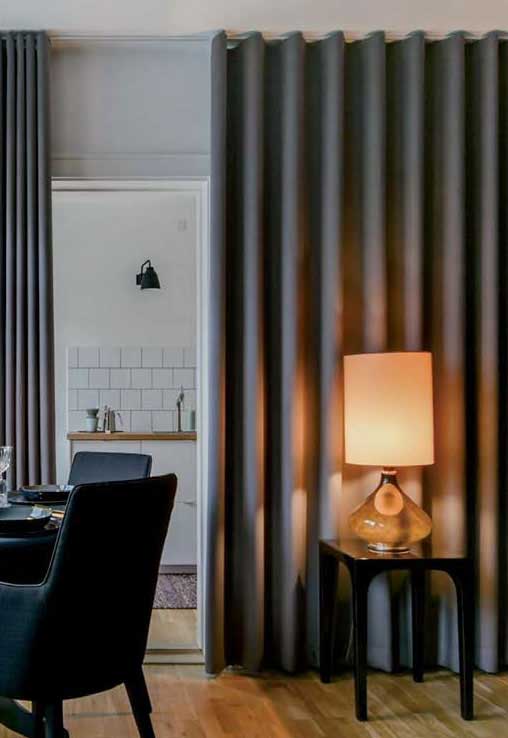
The Silent Gliss Wave system is a curtain heading that replaces traditional pleats with smooth, continuous S-shaped folds. The result is a clean, architectural look that stays consistent whether the curtains are fully open, partially drawn or closed. This guide covers the technical side: how Wave works, glider spacing, fabric calculations and what to check before you order.
If you are more interested in how Wave looks and how to style it, see our companion guide: Mastering the Aesthetics of the Silent Gliss Wave System.
How Wave Works
Instead of sewn pleats or curtain tape with hooks, Wave uses a carrier tape sewn directly into the top of the curtain fabric. This tape has evenly spaced connection points that attach to specialist Wave gliders on the track. Because the gliders are fixed at regular intervals, every fold is identical in depth and spacing. The fabric is held in a constant wave form rather than hanging free, which eliminates the bunching and uneven pleating you get with standard headings.
Wave gliders run on any Silent Gliss track that has been fitted for the system. The gliders are available in two spacings:
- 60mm spacing. Closer together, producing tighter, more defined waves. Suits formal rooms, hotels and period interiors.
- 80mm spacing. Further apart, giving a softer, more relaxed wave. The more common choice for contemporary homes.
The spacing you choose is set when the track is ordered. It cannot be changed after installation without replacing the gliders, so decide on your look before you buy.
Compatible Tracks
Wave works with both manual and electric Silent Gliss tracks. On the electric side, the most common choice is the Silent Gliss Autoglide 5100, which is designed to take Wave gliders and provides smooth, motorised operation. For a full overview of electric curtain options, see our electric curtains range.
When ordering a track, specify that you want it set up for Wave and state your preferred glider spacing. We supply Wave-compatible gliders and Wave tape with track orders, you do not need to source these separately. See the accessories section for tape and glider options if you are retrofitting an existing track.
Fabric Requirements
Wave requires approximately twice the track length in fabric. This is the fullness ratio that creates the wave form. If your track is 2 metres wide, you need roughly 4 metres of fabric per drop before hems.
Not all fabrics suit Wave. The system works best with lightweight to medium-weight materials. Heavy fabrics fight the wave shape. The weight pulls the fabric straight down instead of letting it curve, so the folds end up uneven. Linen, linen-look polyester, voile and medium-weight interlined fabrics all perform well. Very stiff or very heavy wovens are better suited to pinch pleat or eyelet headings.
Measuring for Wave
Measuring for a Wave curtain is straightforward once you know the multiplier:
- Track length. Measure the full track length as you would for any curtain. This is your base measurement.
- Fabric width. Multiply the track length by 2.0 to get the finished fabric width needed. Add seam and side hem allowances on top of this (typically 4–6cm per side).
- Drop. Measure from the glider hook point to your desired hem position. Add 8–10cm for the top heading casing and 8–10cm for the bottom hem.
Because the gliders hold the fabric at fixed intervals, there is no need to account for stack-back in the same way as a pleated heading, but you do still need to factor in that the fabric bunches slightly at the lead edge when fully open. On a wide window, this is minimal.
What to Check Before Ordering
- Confirm your glider spacing preference: 60mm (formal/tighter) or 80mm (contemporary/relaxed).
- Confirm fabric weight with your supplier. If in doubt, request a sample and hold it up to check how it drapes.
- Check the track is Wave-compatible before you buy fabric. Some older Silent Gliss profiles do not take Wave gliders.
- If you are using the Autoglide 5100 or another motorised track, confirm the motor position (left or right) matches your room layout before the track is made to measure.
If you have questions about which glider spacing or track suits your project, get in touch and we can advise based on your fabric and window dimensions.
Shop our range
Browse the products mentioned in this article