How to install electric curtains: DIY vs professional

Reviewed by David Coleman, Website Manager
Reviewed 6 May 2026
The first question most people ask before they order a track is whether they can fit it themselves or whether they need to get a fitter in. The honest answer is that it depends on which product you've ordered, where your sockets are, and what your wall and ceiling are made of. The bulk of the electric curtains we sell are the plug-in Silent Gliss Autoglide 5100, and most competent DIYers can fit one in an afternoon. The 5600 is a different story because it's hardwired, so that one needs a qualified electrician for the spur. The Metropole electric curtain pole sits in the same DIY category as the 5100, because it plugs into a normal 13A socket and the install is mostly the same as fitting a wood or metal pole. This guide walks through how to decide, how the install actually goes for each product, and the eight mistakes we see most often from customer enquiries that you can plan out at the start.
DIY or professional: which one applies to you
The decision is mostly about which product you've got, and you can usually answer it before the order even arrives.
5100 track: plug-in, DIY-friendly
The 5100 arrives bespoke to your measurements with no cutting on site. If you can hang a shelf and you've got a 13A socket within reach of one end of the track, you can almost certainly fit one yourself. The brackets fix into wall or ceiling, the track clips into the brackets, the motor clips onto the track, and the cable plugs into the socket. The only point at which most people get caught out is the fixing into plasterboard, which we'll come back to in the pitfalls section.
Metropole pole: plug-in, the same as fitting a regular pole
The Metropole plugs in the same way the 5100 does, and if you've hung a wood or metal curtain pole before, fitting an electric Metropole will feel familiar. The brackets are wall-mounted, you mark them out, drill, fix, drop the pole into the brackets, and route the cable to the nearest socket. The Metropole is wall-only, so if you want a ceiling-mounted system or you're fitting into a bay window, you want a 5100 or a 5600 track instead.
5600 track: hardwired, electrician needed
The 5600 is hardwired into a fused spur rather than plug-in. It's built for heavy curtains, very long runs, and commercial spaces, and the motor draws enough current that it needs a proper wired connection. You'll need an electrician to put the spur in, and most fitters will do the bracket and track install at the same time. Treat the 5600 as a job for a tradesperson rather than a DIY weekend.
If you're not sure which product you've got or which fits your room, drop us a message before you order and we'll talk it through.
Fitting a 5100 track yourself
The 5100 arrives cut to your exact measurements with the brackets, the motor, a 5m cable with a fitted UK plug, and the controller. There's no cutting required on site. The full instructions come in the box, and the PDF fitting guide is on the site if you want to read it before the parcel arrives.
The sequence is roughly this. Mark out the bracket positions along the line of the track using a pencil and a spirit level, making sure your fixings will land in something solid (joists, studs, or a timber batten if you're working off plasterboard alone). Drill the holes, fit wall plugs if you need them, and screw the brackets in. Clip the track up into the brackets and check it's level along its length. Clip the motor onto the motor end of the track. Plug the cable into your 13A socket. Hang the curtains on the gliders. Then run the quick start guide to set the start and end limits of the curtain travel and pair the controller with the motor.
If you've got the right fixings into something solid and your socket is in reach, the whole job is usually done inside two hours. If anything feels off when you test it, get in touch with us before you start unscrewing things, because most issues are simpler than they look.
Fitting a Metropole pole yourself
The Metropole is the only electric curtain pole on the market and it looks just like a traditional 50mm pole, so the visual side of the install is the same as fitting any decorative pole. The motor is hidden inside the tube and drives the rings along the outside. DEC supplies the pole cut to your length, so there's no measuring or cutting on the day.
You'll need the supplied wall brackets and fixings, a drill, a spirit level, wall plugs that suit your wall type, a screwdriver, and your curtains with compatible Metropole rings. You also need a 13A socket within reach of one end of the pole, because the cable exits from the end and plugs in directly.
The steps run roughly the same as any pole. Mark out the bracket positions level with each other, allowing enough projection from the wall so the curtains hang clear of the window frame. Drill, plug, and fix the brackets. Slide the rings onto the pole before mounting it, because the motor only drives the proper Silent Gliss Metropole rings, not generic curtain rings. Lift the pole into the brackets and secure it with whatever clip or grub screw the bracket uses. Route the power cable along the wall or ceiling to the socket, either under a pelmet, in cable trunking, or down behind the curtain to a socket below. Hook the curtains onto the rings and run a full open-and-close cycle to check nothing snags. Don't extend the cable with a junction box; if the socket is too far away, get an electrician to add one in the right place first.
The Metropole comes in four control variants (B, R, T and TC), and they all install the same way. The variant only changes how you control the pole once it's running.
Eight pitfalls to plan out before you start
Most of the calls we get about installation problems come back to the same handful of issues, and almost all of them are easier to plan around than to fix afterwards.
1. No socket near the window. The 5100 and the Metropole both need a 13A socket within reach of the cable, which is 5 metres long (around 16 feet 5 inches). In older houses the sockets are often positioned for furniture rather than windows, and adding one after the fact means chasing cables through finished plasterwork. If you're decorating, replastering, or doing any building work first, plan the socket position in then. Check every window you're fitting, not just the main one.
2. Measuring the window instead of the track span (outside-recess fits). If the track is mounted in front of the window rather than inside a recess, it wants to extend 15 to 20cm beyond each side of the window frame so the curtains stack clear of the glass when fully open. If the track only just covers the window, the curtains will block the edges even when drawn back. Measure the window, then add the overhang on each side. If you're fitting inside a recess, the recess width sets the track length and the curtains stack inside the recess, so this point doesn't apply.
3. Forgetting about stack-back space. When the curtains are fully open, the fabric stacks at the ends of the track. Depending on the fabric weight and fullness, that stack can be 20 to 40cm wide per side. If you don't allow for it, you'll be looking at curtain fabric across part of the window all the time. The 15 to 20cm overhang from the previous point is partly there to give the stack somewhere to sit on the wall.
4. Fixing into plasterboard without proper support. A loaded electric track with motor and curtains can easily weigh 15 to 20kg or more, and standard plasterboard fixings aren't rated for that kind of sustained load. You need to fix into ceiling joists, wall studs, or a timber batten that's screwed across the joists or studs. A batten gives you a solid line to fix anywhere along, which is useful when the joists don't fall in the right place. Toggle bolts on plasterboard alone aren't enough.
5. Bay windows: not measuring each section separately. A bay needs a bent track that follows the angles of your bay, and each section of the bay needs its own measurement plus the angles at each join. The good news is you don't have to figure this out on your own. When you order a bent track from us, we send you a full measuring guide that walks you through it step by step, so when the track arrives it fits the bay perfectly. If you'd rather talk it through before you order, get in touch and we'll walk you through it on the phone.
6. Thinking you're locked in to the variant you order. The 5100 and the Metropole come in several variants with different control options, but you're not locked in. You can add timers, extra remotes, and multi-channel remotes as accessories after the install without swapping the motor out, so pick the variant that matches how you'll use the curtains on day one and add to it later if your needs change.
7. Hanging curtains that are too heavy. The 5100 handles the vast majority of domestic curtain weights without complaint, but very heavy interlined curtains, velvet, or layered fabric can be more than it's built for. If your curtains are on the heavier side, the 5600 is the right choice. Check the weight against the track's capacity before you order.
8. No access to the motor end. The motor rarely needs attention, but occasionally it does, and if you've boxed the track end into a pelmet with no access panel, you've made a problem for yourself. A removable pelmet section or a simple access flap is plenty. Just make sure you can physically reach the motor end if you ever need to.
When to call a pro
There are three situations where it's worth getting a fitter or an electrician in rather than doing it yourself.
The first is the 5600. It's hardwired, the spur has to be installed by a qualified electrician under Part P building regulations, and most fitters will do the bracket and track install in the same visit. There's no DIY route for the 5600.
The second is when the wall or ceiling isn't straightforward. Solid plaster on lath, decorative coving you don't want to drill through, a ceiling rose in the wrong place, or a ceiling that needs a batten run across joists you can't easily locate. None of that is impossible DIY, but if you're not confident finding fixings and getting them solid, paying a fitter for half a day is cheaper than redoing the plasterwork.
The third is when there's no socket in the right place. You can route a cable along the top of the window frame to a socket on the same wall, but if you'd be running a cable across the room or through doorways, the right answer is to have an electrician add a socket near the window. Don't extend the supplied cable with a junction.
If any of those apply to your room, we work with fitters in most parts of the country and can usually point you at someone local. Drop us a message with a couple of photos of the window and the wall, and we'll tell you whether it's a DIY job or worth booking a fitter.
If you're still deciding which track or pole suits the room, the electric curtains page has the full range and the buying guide, and we're on 01543 279996 if you'd rather have a chat about it.
Shop our range
Browse the products mentioned in this article

Silent Gliss Autoglide 5100
The UK's best-selling premium electric curtain track. Whisper-quiet, remote or timer control.
View product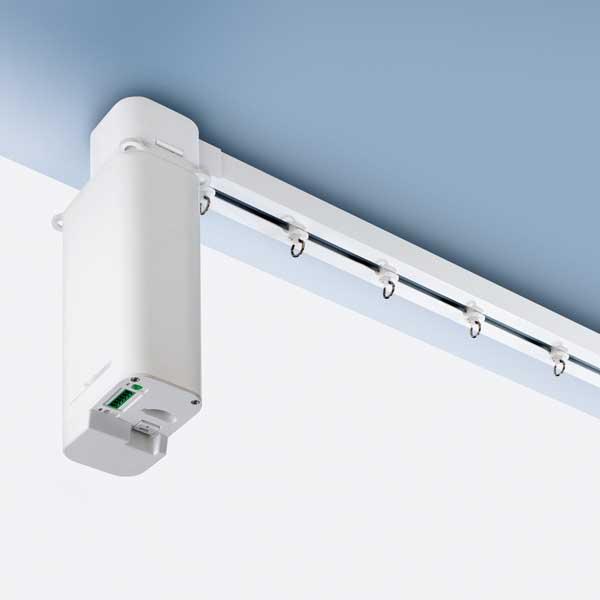
Silent Gliss 5600
Heavy-duty electric curtain track for large, heavy curtains and commercial spaces.
View product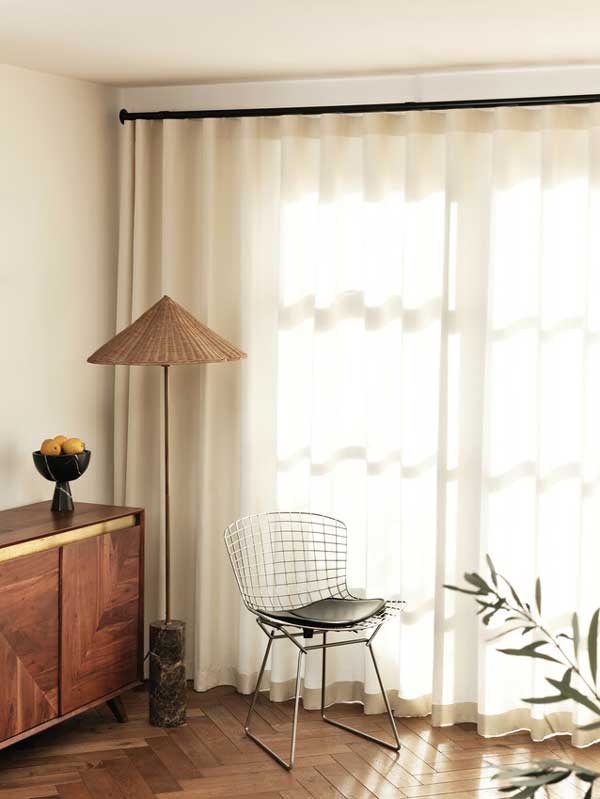
Silent Gliss Metropole
The only electric curtain pole. Classic decorative look with a whisper-quiet motor.
View product