Electric Curtains for Bay Windows: Which Silent Gliss Track Fits

Reviewed by David Coleman, Website Manager
Reviewed 7 May 2026
A bay window has corners or a curve, and an electric curtain track has to follow that shape. The track has to be bent to the exact angles of your specific window before it leaves the factory. A straight track won't sit against the wall, and a track bent to a generic bay isn't bent to yours.
Only a few systems on the UK market do this properly on a motorised curtain. We sell two of them: the Silent Gliss Autoglide 5100 and the Silent Gliss 5600. For nearly every UK bay, the 5100 is the answer. Below, how to tell which one fits your house.
Why a bay window needs a bent track, not a straight one
A bay window changes direction either at sharp corners (the classic three-sided box bay you see in millions of UK semis) or as a continuous curve (a Victorian or Edwardian bow). A straight track can't follow either shape, so the curtain ends up bunched at one end or pulling away from the glass at the corners, and the motor strains because the gliders are trying to drag a load round a bend that the track wasn't built for.
The right answer is a track that's been bent during manufacture to the exact angles you measure on your wall. The bend points are reinforced so the curtain's weight doesn't distort them, and the inside of the channel is shaped so the gliders pivot through the corner rather than catching. There are only a few products on the UK market that genuinely do this on a motorised track, and we sell two of them.
The Silent Gliss 5100, the right answer for most UK bays
For nearly every domestic bay window in the UK, the Silent Gliss Autoglide 5100 is the track to ask about. It plugs into a normal three-pin socket so you don't need an electrician, and it's bent to your measurements before it ships, so it arrives ready to fix to the wall.
The 5100 takes up to two bends per track, either as crisp angles (90, 120, or 135 degrees, the common ones in UK houses) or as a curve. Three-sided box bays have two corners, and that's exactly where the 5100's two-bend allowance lands, which is why it covers most of what we get asked about. The maximum total length is 6 metres including all sections, the maximum curtain weight is 30kg on a straight run and 15kg once it's bent, and the minimum bend radius for a curve is 250mm.
If your bay has more than two angle changes, which some five-sided Victorian bays do, the 5100 alone won't cover the full run, but the 5600 below will, or in some cases two separate 5100 tracks meeting at the centre is the cleaner solution.
The 5100 works with the Silent Gliss Wave heading system, and we'd recommend Wave for any bay because the evenly-spaced runners create a uniform ripple all the way round the bends rather than the curtains gathering awkwardly at the corners. Wave looks particularly good on bow windows.
You can see real installations in our 5100 inspiration gallery, or browse the full electric curtains range to see the system alongside the 5600 and the Metropole.
When the 5600 is the right call instead
The Silent Gliss 5600 is the bigger, heavier, more capable option, and there are specific situations in a bay window where it's the correct choice over the 5100. It supports any number of bends in a single track, takes up to 65kg of curtain on a 10-metre run, and goes down to a 200mm minimum bend radius for tight curves. It's also the only Silent Gliss curtain track that connects to a smart home, so if Alexa or Google Home is on the brief, the 5600 is the answer, and we've covered that side of things in detail in our smart curtains guide.
The trade-off is that the 5600 wires into the mains rather than a plug socket, so a qualified electrician needs to do that part of the install. It also costs more, both for the track itself and for the wiring. For most domestic bays it's more track than the window needs, but if you've got a five-sided bay with three or four angle changes, an unusually wide bow window, or interlined blackout curtains that the 5100 wouldn't pull cleanly, the 5600 is the right buy.
The Silent Gliss Metropole and bay windows
The Silent Gliss Metropole is a popular curtain pole, and we get asked about it for bays often enough that it's worth being clear up front. The electric version of the Metropole only comes as a straight pole, so it cannot be bent for a bay window. The manual version of the Metropole can be bent to a bay shape, but a manual pole isn't a motorised system. If you want electric curtains in a bay window, you're looking at the 5100 or the 5600, not the Metropole.
How to measure your bay window
Accurate measuring is the part that determines whether the track fits when it arrives, so it's worth taking your time. Our full measuring guide walks through the diagrams, but the bay-specific checks are these.
Decide whether you're face-fixing to the wall above the window or top-fixing into the ceiling, because the dimensions you take depend on it. Then measure each section of the bay independently rather than trying to take one sweeping figure round the corners. So for a three-sided box bay, that's the left return, the centre section, and the right return as three separate measurements. Record the angle at each bend point with a protractor or a digital angle finder so we can match the bend exactly. Add a 100 to 150mm return on each end past the edge of the window so the curtains stack clear of the glass when they're open. Then add up all the section lengths plus the returns, and confirm the total is within the 5100's 6-metre limit, or the 5600's 10-metre limit if that's the route you're going.
If any of that is uncertain, take photos of the bay from inside the room and from each side, send them over with the rough measurements, and we'll confirm the configuration before you order. We help customers measure bay windows most weeks of the year, so it's not a fuss.
Common bay configurations
Three-sided box bay
This is the most common bay shape in UK terraced and semi-detached houses, with two 90-degree corners. A single 5100 with two angle bends covers it, centre-opening curtains are the standard set-up, and most installs are within an afternoon's work for a confident DIYer.
Five-sided angled bay
You see these in Victorian and Edwardian properties, with four angle points typically at 135 degrees. A single 5100 won't cover the full run because of the two-bend limit, so the choice is two separate 5100 tracks meeting in the middle or one 5600 with all four bends in a single track.
Bow window (curved bay)
A bow window is a continuous curve with no angle points. The 5100 handles a curve down to a 250mm minimum radius, the 5600 down to 200mm. Wave-headed curtains look especially good on bow windows because the runners follow the arc evenly.
Oriel and projecting bay
Bays that project from an upper storey often have restricted ceiling space, so face-fixing to the wall is usually the only practical option. They're nearly always within the 5100's two-bend allowance.
See a bay window install in action
Two short clips from real customer installs of the Silent Gliss Autoglide 5100 in bay windows, both filmed by the customer after we'd shipped the track and they'd fitted it themselves. The first shows a three-sided box bay opening from a single remote, the second shows the curtains closing round the bend without snagging.
Frequently asked questions
Can I bend a standard electric curtain track for a bay window myself?
No. Tracks designed for bending have a reinforced internal channel and a factory-made bend, and the system relies on both. Heating and bending a straight aluminium track at home will distort the channel, the gliders won't run, and the motor will strain or stall. The 5100 and 5600 are both bent in the factory to your exact angles before they ship.
How many bends can the Silent Gliss 5100 have?
Two. For a bay with more than two angle changes, you either fit two separate 5100 tracks or step up to the 5600, which supports any number of bends in a single track.
Do I need an electrician to fit a 5100 in a bay window?
No, the 5100 plugs into a standard three-pin socket. The 5600 is hardwired into the mains and does need an electrician.
What's the maximum width for a bay window track?
The 5100 covers up to 6 metres total including all sections of the bay. The 5600 covers up to 10 metres. Most domestic bays come in well within the 5100's limit.
Will the curtains hang properly around the bends?
Yes, provided the track has been bent to your exact angles in manufacture. We recommend the Silent Gliss Wave heading for bay windows because the evenly-spaced runners create a uniform ripple round the corners rather than gathering awkwardly at the bend points.
Can the 5100 be controlled by Alexa or Google Home?
No. The 5100 uses an RF remote, a wireless wall switch, and a programmable timer, but it doesn't connect to WiFi. If you want Alexa or Google Home to control your bay window curtains, the 5600 with the Move 4.0 Server is the system you need. We've covered the smart home side of this in our smart curtains guide.
Can I get a quote for my specific bay?
Yes, send measurements and a couple of photos through the contact page and we'll confirm the right product, the configuration, and the price before you order.
Shop our range
Browse the products mentioned in this article
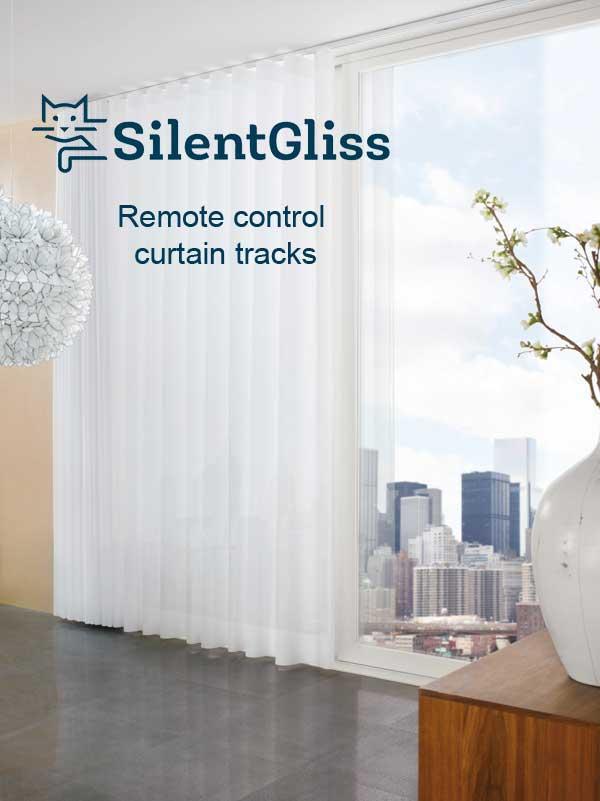
Silent Gliss Autoglide 5100
The UK's best-selling premium electric curtain track. Whisper-quiet, remote or timer control.
View product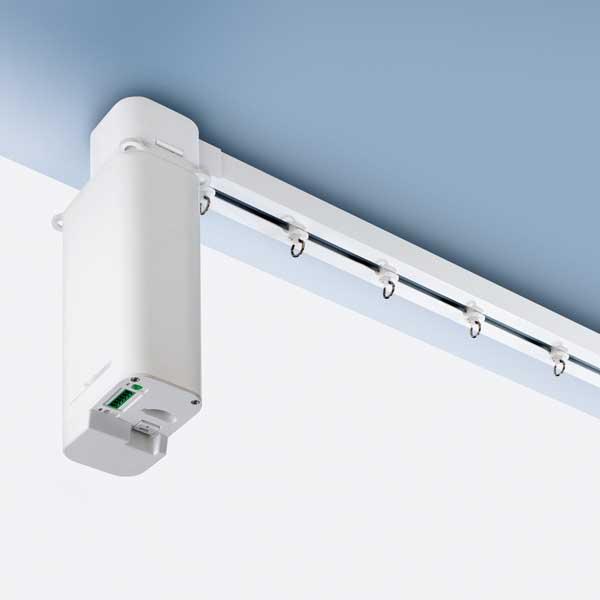
Silent Gliss 5600
Heavy-duty electric curtain track for large, heavy curtains and commercial spaces.
View product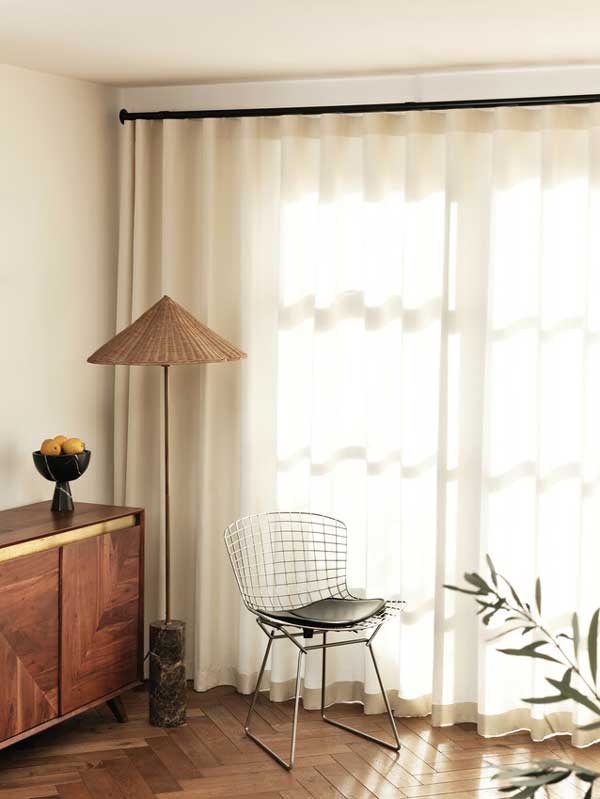
Silent Gliss Metropole
The only electric curtain pole. Classic decorative look with a whisper-quiet motor.
View product